
Is That a Broken Spring? 3 Ways to Tell Why Your Door Won’t Lift
- Commercial Garage Door Repair
- Garage Door Opener Installation
- Garage Door Spring Repair
- Same Day Garage Door Repair
- Custom Garage Door
- Garage Door Opener Repair
- Garage Door Track Repair
- Garage Door Cable Repair
- Garage Door Panel Repair
- Local Garage Door Repair
- Garage Door Replacement
- Noisy Garage Door Fix
- Gate Repair
- Garage Door Installation
- Garage Door Section Replacement
- Overhead Garage Door Repair
Is That a Broken Spring? 3 Ways to Tell Why Your Door Won't Lift
You press the button on your remote, hear the motor strain, and watch the door groan before it barely budges an inch. This frustrating moment often signals a major mechanical failure hidden just above the door frame. While many issues can plague an overhead system, a broken spring remains the most frequent culprit behind a door that refuses to lift.
At Garage Door Services Laurel Florida, we understand that these high-tension coils do the heavy lifting for your garage door, and when they snap, the opener simply cannot manage the dead weight alone. Understanding the specific warning signs of a broken spring failure allows you to diagnose the problem quickly and avoid further damaging your opener’s motor.
The Mechanics of a Silent Lift
Your garage door opener is the brain, but the springs are the muscle. Most residential doors use torsion springs above the door or extension springs along the side tracks. These components store energy to counteract the weight of the panels. After 7,000 to 10,000 cycles, the metal fatigues and pulls apart. Early identification prevents motor burnout and sudden door collapse.
1. The Auditory “Bang” and Visual Gap
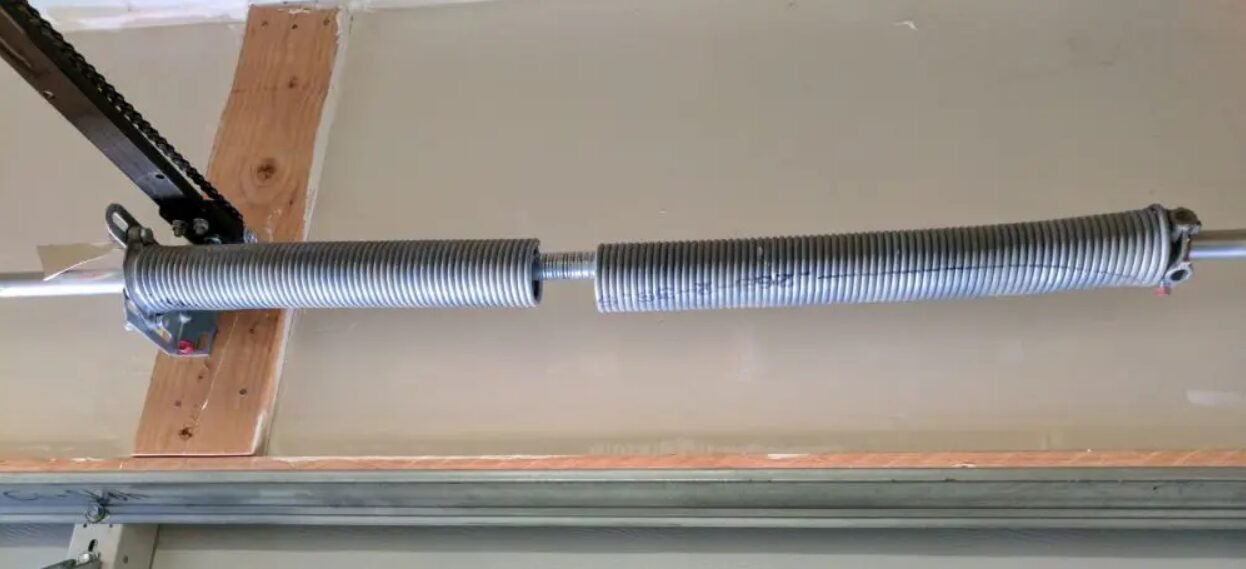
A spring failure often begins with a loud, thunderous “bang.” This sound is the coil instantly releasing its stored energy. If you suspect a failure, inspect the metal coil above the door. A healthy spring is one continuous, tightly wound piece. A broken spring shows a clear, two-to-three-inch gap where the coil separated. If you see this gap, do not operate the door.
2. The Door Only Opens a Few Inches
Openers have safety sensors to detect excessive strain. If the door moves only six inches before reversing, the motor senses a problem. Without spring assistance, the door weighs hundreds of pounds. The system shuts down to prevent stripped gears or overheating. If you pull the emergency release and cannot lift the door manually, the tension is gone. A balanced door should feel light; a broken one feels like a wall of dead weight.
3. Frayed Cables and a Crooked Hang
Springs and cables work together in a closed-loop system. When a spring snaps, lift cables often lose tension and fly off the drums. You may see cables dangling loosely or tangled around the track. If your door has two springs and only one breaks, the door will appear crooked as it rises. One side has support while the other lags. This misalignment can bend tracks or damage rollers if forced.
Restore Your Home’s Access Safely
Diagnosing the problem is the first step, but fixing it requires professional precision. Because these coils hold enough torque to cause severe injury, you should never attempt to wind or replace them without the proper tools and training. A malfunctioning door traps your vehicles and compromises your home’s security, making a swift repair essential for your daily routine.
Don’t let a broken spring keep your car hostage or put your family at risk. Attempting a DIY fix on a high-tension system often leads to more expensive damage or a trip to the hospital. Instead, trust the experts at Garage Door Services Laurel Florida to handle the heavy lifting for you. We provide the specialized winding bars and heavy-duty replacement parts necessary to balance your door perfectly. Our technicians ensure your garage door operates smoothly and quietly, giving you back the convenience and safety you expect from your home’s largest entrance.